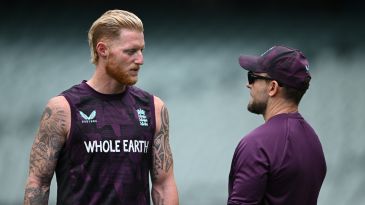
Ben Stokes Dismisses ‘Rift’ Rumors with Brendon McCullum
In the wake of of a challenging 4-1 defeat in the Ashes, the cricketing world has been rife with speculation regarding the relationship between England’s Test captain, Ben Stokes, and head coach Brendon McCullum. Stokes has now addressed these rumors head-on, describing the suggestion that the two were not “aligned” as a “massive overstatement.”
After maintaining a low profile following the tour—including missing the early stages of the County Championship due to a fractured cheekbone—Stokes has used the ECB‘s internal media channels to clarify his stance. His comments come as England prepares for an upcoming Test series against New Zealand in June.
The Necessity of Healthy Debate
Stokes emphasized that complete agreement between a captain and coach is not only impossible but undesirable in a high-pressure sporting environment. According to the captain, the ability to engage in discussions and debates is what ultimately leads to the team to the right decisions.
“When you’re in a position of leadership along with someone else, if anyone thinks that you’re always going to agree on everything, then it’s just impossible,” Stokes explained. “To me, that just isn’t a healthy environment for sport, in particular, where everyone just agrees with everyone or says yes to the person up there. You need debate. You need… not arguments, but you need discussions.”
Stokes acknowledged that while he and McCullum are similar in many ways, they possess different perspectives. However, he insists that their shared goal—winning and maximizing the team’s potential—keeps them aligned.
“We agree 95% of the time on things, but those 5% things that we might have different views on, we talk about it between each other and then we end up getting to the place where we both feel that we want to get to,” Stokes added.
Looking Toward 2027
With a contract running until the end of the 2027 home summer, Stokes expressed his hope to remain in leadership alongside McCullum. However, he hinted that their approach might evolve over the next 18 months, suggesting a “slightly different” direction for the team.
“I’m very confident in mine and Brendon’s ability to be able to work together… but work together in a slightly different way,” Stokes noted, reaffirming their commitment to winning everything and giving the players the best possible support.
Analysis: Does the Claim of Alignment Hold Up?
While Stokes maintains that they are aligned, several key moments from the recent Ashes tour provided evidence of a divergence in philosophy. Rob Key, the ECB managing director, previously acknowledged this difference, noting that Stokes’ approach is often “slightly more conservative” compared to McCullum’s more aggressive instincts.
Key Points of Contention
- Preparation in Brisbane: Following a swift defeat in Perth, Stokes pushed for a longer build-up and more training for the second Test at the Gabba. Interestingly, McCullum later expressed regret, suggesting the team may have “over-prepared.”
- The ‘Blockathon’ Strategy: In Brisbane, Stokes played a gritty, defensive role, spending hours to add 96 runs for the seventh wicket. This contrasted sharply with McCullum’s philosophy of giving players “freedom” and removing pressure.
- Adelaide Approach: While McCullum called for “conviction” in an attacking style in Adelaide, Stokes opted for a grind, spending over five hours to score 83 runs—a strategy Pat Cummins described as “surprising.”
- The Number 3 Spot: A long-standing debate existed regarding the batting order. McCullum had publicly hinted at replacing Ollie Pope with Jacob Bethell, while Stokes remained a steadfast supporter of Pope until the late change for the Boxing Day Test at the MCG.
- Winning vs. Entertainment: The fundamental tension between winning the match and maintaining an entertaining style of play became apparent. Stokes stated his primary goal was “winning,” while McCullum defended the team’s record by arguing that their aggressive style had ensured Test cricket remained “relevant.”
Despite these visible differences, the stability of the leadership duo remains the center of England’s strategy as they head toward the next cycle of the international calendar.