The Struggle for Consistency in IPL 2026
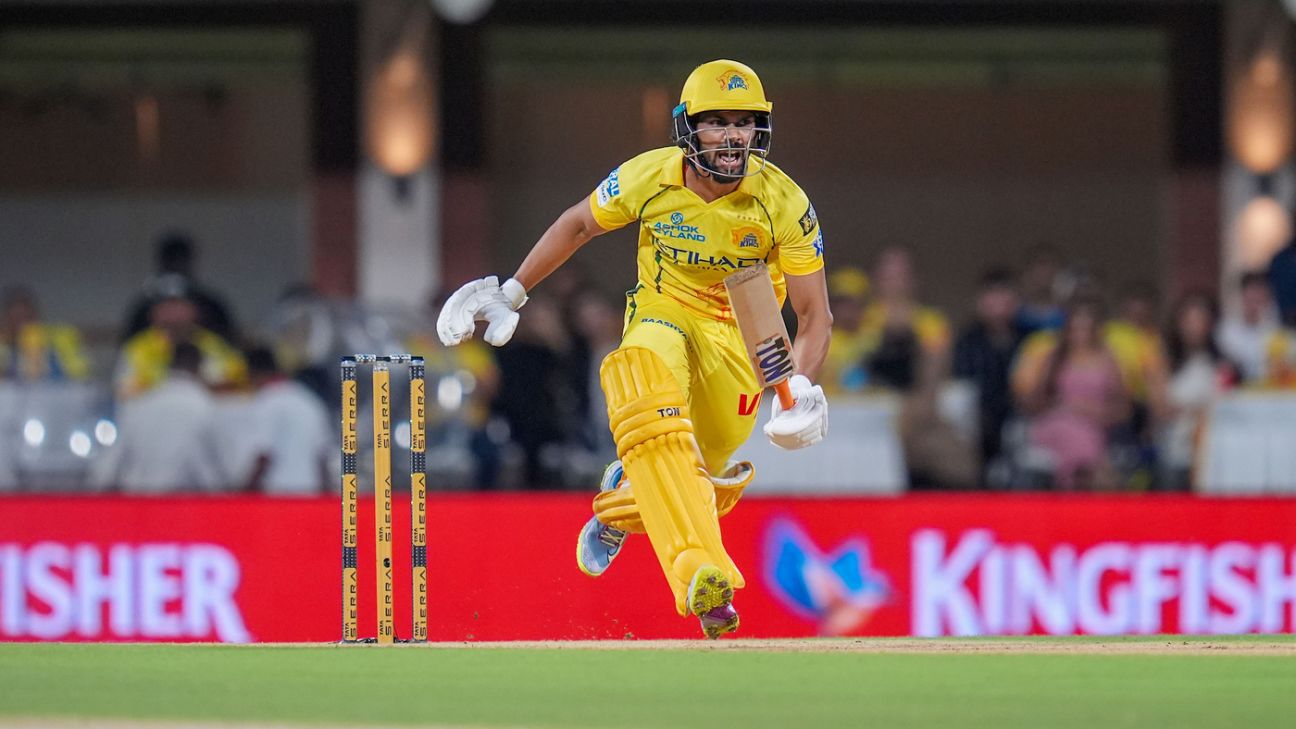
The 2026 edition of the Indian Premier League (IPL) has started on a challenging note for Chennai Super Kings (CSK) skipper Ruturaj Gaikwad. With initial scores of 6, 28, 7, and 15, Gaikwad has struggled to find the fluency that previously defined his time in the tournament. Carrying a modest strike rate of 103.70, his batting form has mirrored the early inconsistencies of his team, sparking a broader conversation about his role as an opener in a high-octane format.
The “Tunnel Vision” Problem
Former Indian opener Wasim Jaffer, speaking on ESPNcricinfo’s TimeOut show, did not mince words regarding Gaikwad’s current approach. According to Jaffer, the CSK leader is suffering from a psychological barrier—what he describes as a ‘tunnel vision of scoring big.’ Jaffer noted, “He’s somebody who wants to score big. You know, being an opener, I don’t think you need to look at [trying to get] 80 or 100 from the outset. I think you need to look at giving a terrific start.”
Jaffer argues that Gaikwad possesses the technical ability to dominate, having registered multiple centuries in the IPL previously, but he is currently holding himself back. “If he’s asked to push the scoring rate, I think he needs to take a lot more risk. He’s got the game, but he just holds himself back,” Jaffer added.
A Shift in Mindset Required
Aaron Finch, the former Australian captain, echoed these sentiments, emphasizing that the issue is not technical, but rather a fundamental shift in mindset required for the modern game. Finch pointed out that while players like Shubman Gill can succeed by anchoring an innings, they require a high-scoring partner at the other end. Currently, Gaikwad is struggling to fulfill either role—neither providing a flyer at the start nor accumulating enough runs to stabilize the innings effectively.
“You have to be in the right mindset to be able to play like that,” Finch explained. “For 25 years, his focus has been so narrow on bulk runs, ‘get runs, runs, runs.’ You have to change your mindset to impact: what is the biggest impact I can have on this game?”
The Evolution of T20 Cricket
The experts contrasted Gaikwad’s traditional approach with the newer generation of cricketers who grew up playing T20 as their primary format. For many young players, the fear of failure is secondary to the goal of aggressive play. For Gaikwad, who has spent his career being coached to value long innings and centuries, adjusting to this ‘impact-first’ mentality presents a significant challenge.
However, Jaffer remains optimistic that growth is possible. He pointed to Virat Kohli as the ultimate example of a player who successfully recalibrated his game. “We’ve seen Virat Kohli do that: change his game. He’s a different Kohli to what we saw at the start of his career. I am sure Ruturaj can do it, but he needs to put the impact first, not think about the bulk of runs,” Jaffer concluded.
Looking Ahead for CSK
Gaikwad’s lack of representative T20 cricket in the lead-up to this year’s tournament—having been sidelined by injury in 2025 and focusing on List A and First-Class formats for Maharashtra—may also be contributing to his current rustiness. With the IPL season in full swing, the onus is now on the CSK management and Gaikwad himself to adapt his strategy. If the skipper can successfully pivot away from the pressure of big individual scores and embrace a higher-risk, high-impact style of play, both his form and the team’s standing could see a significant resurgence.
The cricket world will be watching closely to see if Gaikwad can shed the “tunnel vision” and unleash his true potential in the coming fixtures.